Peaslee’s 1908–1913 amnesia
The Colour Out of SpaceNathaniel Wingate Peaslee’s 1908–1913 amnesia is the bodily and temporal rupture at the center of his account: for five years, four months, and thirteen days, his ordinary consciousness is absent, while another intelligence appears to act through his body. The interval ends with a startling reversal. Peaslee’s own mind returns, but its sense of time has not advanced beyond the morning when the economics class began.
Background and Sudden Collapse
Before the episode, Peaslee’s life had followed an unremarkable academic and family course. He had studied at Miskatonic University, pursued economics at Harvard, and returned to teach political economy. He had no interest in occultism or abnormal psychology. That ordinary background matters to the event’s framing: the disruption is not presented as the culmination of a prior fascination with the uncanny, but as an invasion of a life governed by familiar work and domestic routines.
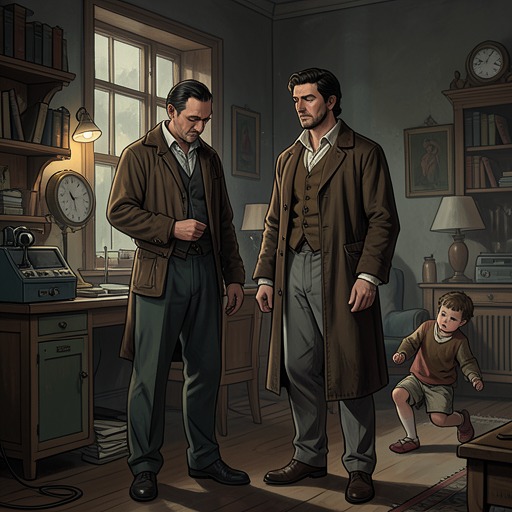
On Thursday, May 14, 1908, Peaslee felt a headache and an unfamiliar pressure on his thoughts, as if someone else were trying to take possession of them. Brief, chaotic visions had preceded the collapse by several hours; only later could he recognize them as warning signs. At about 10:20 in the morning, while teaching a class on the history and present tendencies of economics, he saw strange shapes and seemed to occupy a grotesque room rather than his classroom. His speech and thoughts wandered from the lesson, alarming his students, and he slumped unconscious in his chair.
The Displaced Consciousness
Peaslee remained unresponsive for sixteen and a half hours. When he began speaking at three o’clock the following morning, his family and doctors found no ordinary recovery underway: he seemed not to remember who he was or what his life had been, yet appeared anxious to conceal that ignorance. His gaze and facial movements were unfamiliar, and even his speech seemed laborious. He handled English awkwardly, with a stilted, book-learned quality, alien pronunciation, archaic fragments, and expressions that baffled those around him.
This altered state makes the apparent amnesia more than a blank in personal memory. The body is present, but its familiar manner of speaking and moving has changed; the people around Peaslee encounter a stranger occupying the place of someone they know. The account’s later explanation supplies a mechanism for that disjunction. The Great Race could project a mind into a future body with mechanical aid, displacing that body’s original mind into the projector’s own time and body. The displaced consciousness could then be guarded and questioned. In this framework, the years missing from Peaslee’s personal experience are not simply years of unconsciousness: they mark an exchange that separates his consciousness from its ordinary place in time.
Five Years Lost, One Morning Preserved
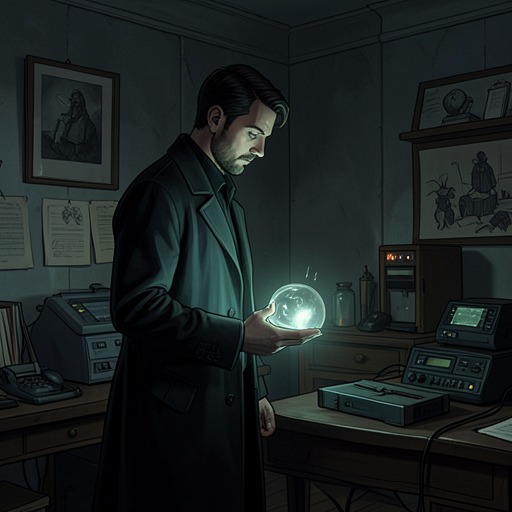
The gap is measured by the lives and circumstances Peaslee must re-enter, but his returning consciousness carries a radically different clock. On the night before his return, the housekeeper and maid were dismissed until midday, and a lean, foreign-looking man arrived by automobile. A peculiar machine had stood on a table in the sitting room; by morning both the machine and the visitor were gone. The remaining papers Peaslee had written during the amnesia had been burned. These details leave the return surrounded by evidence of concealed activity, even as the material traces are removed.
At 11:15 on September 27, Peaslee stirred, and his face began to show signs of expression. His doctor judged that this expression belonged not to the secondary personality but to Peaslee’s normal self. Around 11:30, Peaslee muttered syllables that seemed unrelated to human speech and appeared to struggle against something. Shortly after noon he began speaking English again, picking up a lecture passage about the economist William Stanley Jevons and the proposed relation between commercial cycles and solar activity. The return is registered not through an explanation from Peaslee but through the recovery of his interrupted academic sentence.
Peaslee’s own sense of the event confirms the scale of the temporal break. His mind returns as though it were still Thursday morning in 1908, with the students looking toward the battered desk on the platform. The calendar has advanced by more than five years; for the consciousness that resumes its place, the lecture remains unfinished. That contrast turns the amnesia into a collision between two measures of duration: the years that have passed for everyone around him and the interval that seems to have passed for him.
Return and Narrative Significance
The end of the episode restores Peaslee’s ordinary consciousness, not the life that consciousness left behind. The book describes his reabsorption into normal life as painful and difficult, with the loss of more than five years creating countless matters to adjust. He must learn what happened during his absence and resume a professorship that the university offers back to him. Thus, the return closes the period of possession while opening a prolonged reckoning with its consequences.
The episode also makes the narration’s temporal structure part of its meaning. Its opening is recoverable only through later recognition: the strange visions become premonitions in retrospect, and the apparent illness acquires a different explanation when the account describes the Great Race’s method of exchanging minds across time. Yet that explanation does not erase the lived discontinuity. The recovered mind still understands itself as the lecturer who has just lost consciousness, while the people and institutions around him have endured the missing years. The amnesia therefore leaves Peaslee with a divided history: a continuous self-image, an interrupted memory, and a changed world that demands he begin again.